A pool deck you can walk on barefoot in August that won't rust from the inside
Cool-touch, non-slip, reinforced with something the salt air can't eat, sloped to the drains and isolated from the coping — a Grand Strand pool deck has to survive sun, salt and sand at once.
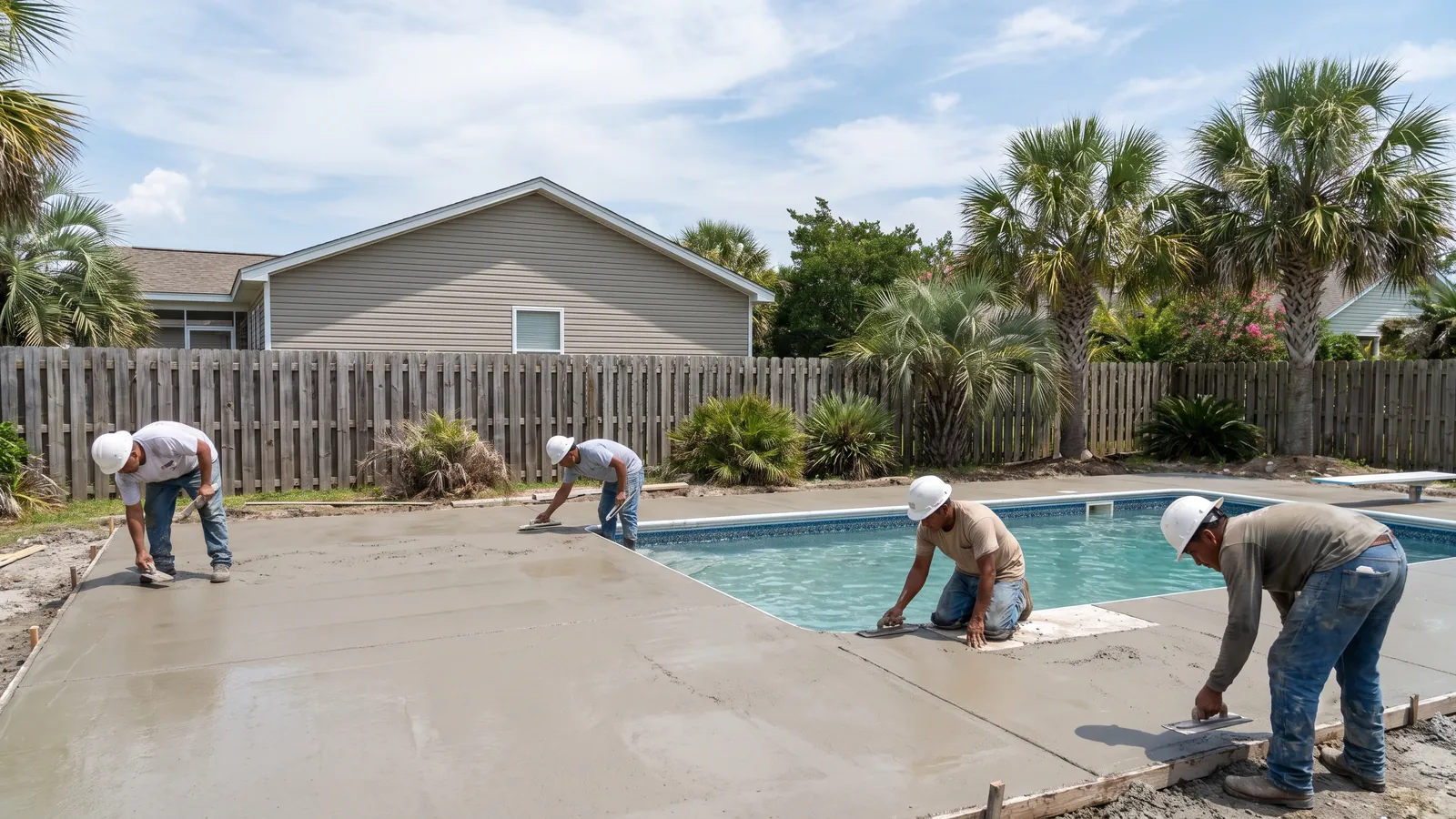
The pool decks that fail on the Grand Strand fail from the inside. The builder laid welded wire mesh directly on the sand instead of lifting it into the slab, the salt air and the chlorinated splash found it within a few years, the steel rusted and expanded, and the deck surface spalled off in sheets around the rust lines. Within a mile of the ocean — which is most of Myrtle Beach, Surfside, Garden City and North Myrtle Beach — we treat a pool deck as a marine-exposure slab: a 0.40 water-cement ratio, 4,000-psi air-entrained concrete, fiber reinforcement or epoxy-coated rebar on chairs so it sits in the middle of the slab, and a sealer that keeps the surface closed. Inland in Carolina Forest and Conway it's the chlorine and the pool chemistry rather than the ocean, and the same mix handles it.
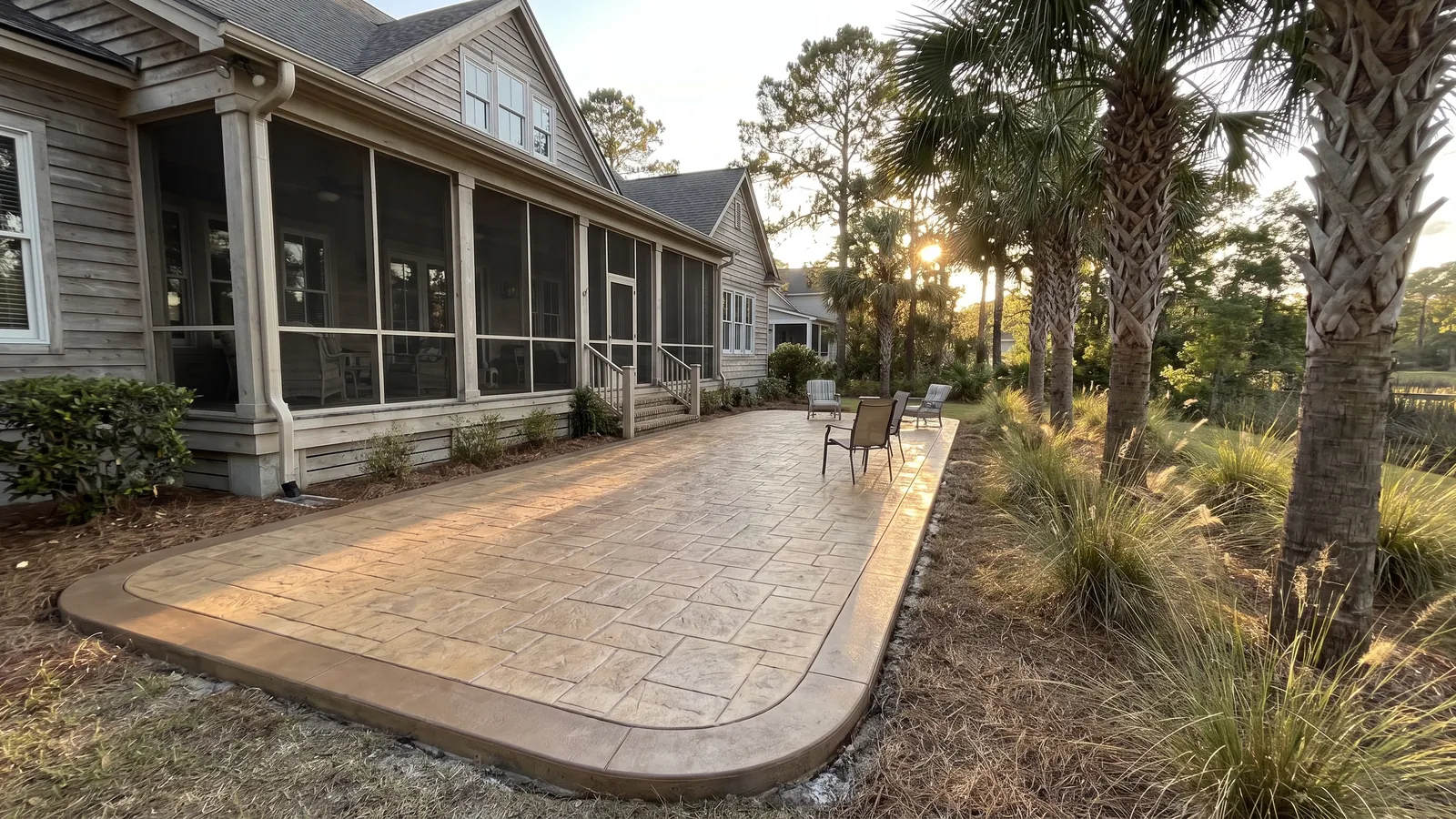
The rest is the geometry: a compacted base that doesn't settle at the far corner of the deck, a quarter-inch-per-foot slope away from the pool to the deck drains and the yard, an expansion joint between the deck and the coping so the pool shell and the slab can move separately, and control joints laid out in a pattern that looks intentional. The finish is where most people spend the decision: a plain broom is cool and cheap, a knockdown or cool-deck texture is cooler underfoot and hides a lot, stamped and colored patterns look like stone and cost like it, and exposed aggregate wears forever but gets hot. We'll walk you through the trade-offs on your pool.
What's included
Marine-exposure mix
0.40 w/c, 4,000 psi, air-entrained within reach of salt spray; fiber or epoxy-coated steel, never bare mesh on the sand.
Sloped to the drains
Quarter-inch per foot away from the pool, deck drains where the water collects, no puddles at the steps.
Isolated from the coping
Expansion joint between deck and pool shell; control joints laid out as a pattern.
Cool, non-slip finishes
Broom, knockdown texture, cool-deck systems, stamped and colored, exposed aggregate — with the heat and grip trade-offs explained.
Compacted base
Pool backfill settles; we compact it and the base course before the pour.
Screen enclosure ready
Thickened perimeter and anchor points where a screen cage will bolt down.
Pool decks cost in Myrtle Beach, SC
| Job | Typical price | Notes |
|---|---|---|
| Basic broom-finish deck, 400 sq ft | $3,200 – $5,200 | Around a typical 15 × 30 pool |
| Knockdown or cool-deck texture, 400 sq ft | $4,400 – $7,200 | Cooler underfoot, hides sand |
| Stamped and colored deck, per sq ft | $12 – $20 | Slate, flagstone, travertine looks |
| Large deck with sun shelf and steps, 800 sq ft | $7,500 – $14,000 | Multiple elevations and drains |
| Deck drains, per run | $300 – $700 | Channel or spot drains tied to the yard |
| Remove an old deck | $1.10 – $1.80 / sq ft | Plus landfill |
These are 2026 Grand Strand ranges so you can budget. Your written price is itemized — removal, base, thickness, reinforcement, finish, joints, the permit and its inspections — and good for 30 days.
Recent work
Questions we get about pool decks
How soon after the pool is built can the deck be poured?
After the shell is plumbed, pressure-tested and the backfill has had time to settle and be compacted — usually a couple of weeks for a gunite pool. Pouring over fresh, uncompacted backfill is why decks sink at the far corner.
What's the coolest finish for bare feet?
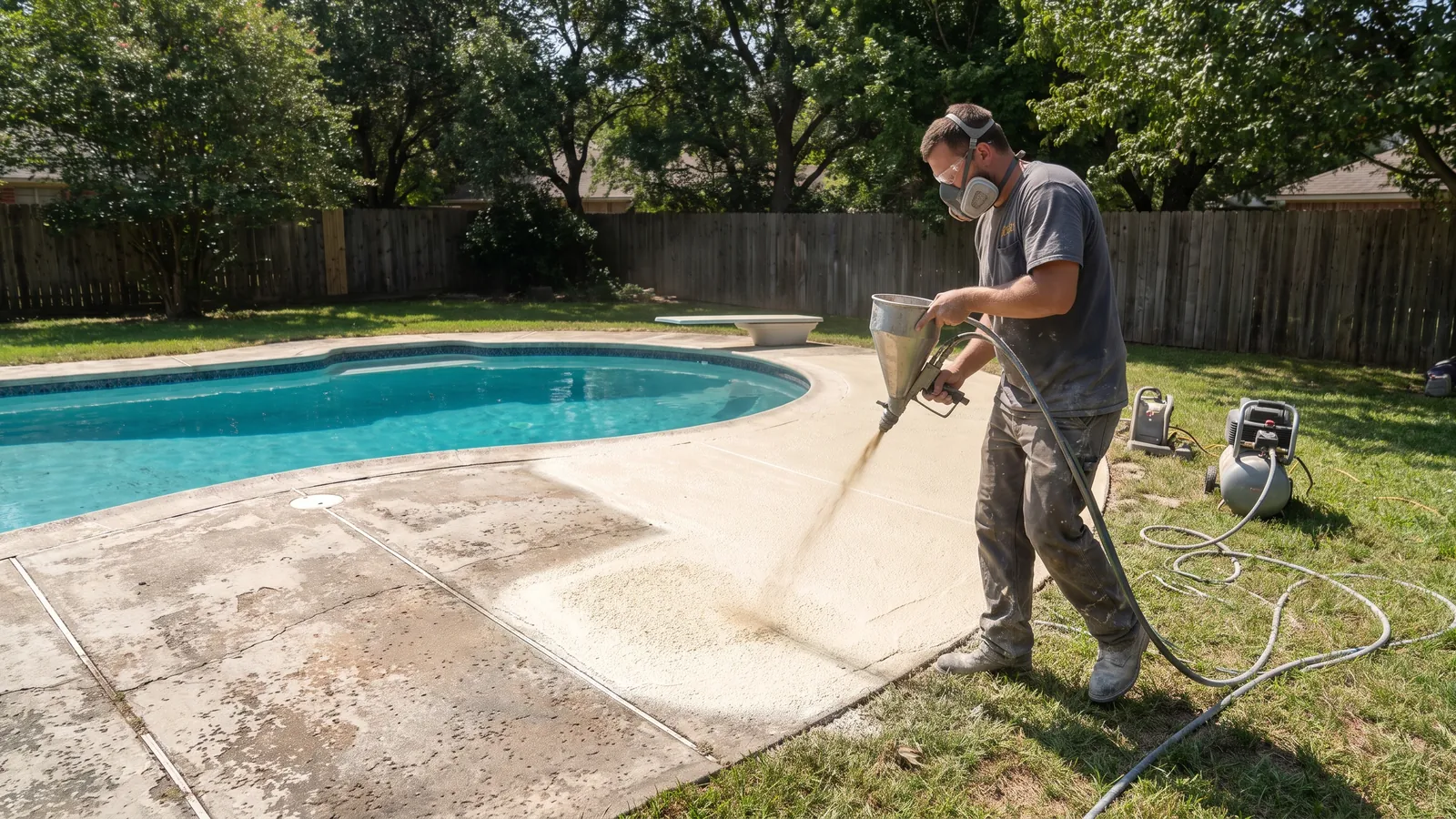
Light-colored knockdown and cool-deck acrylic textures are the coolest, then a light broom finish, then light stamped work. Dark colors and exposed aggregate get hot. Any finish gets hot at 2 PM in August; lighter and textured just gets less hot.
Do you need a permit for a pool deck?
The deck itself is flatwork and generally exempt in the county; the pool, its barrier fence and any screen enclosure need permits from the city or county building department. If you're in a flood zone and adding fill, that's a separate question — see the flood guide.
My deck is spalling. Replace or resurface?
If the spalling follows rust lines from mesh near the surface, the steel will keep going and the deck is usually replaced. If the concrete is sound and only the surface is worn or hot, an overlay or cool-deck resurfacing fixes it for a third of the price. We'll tell you which.